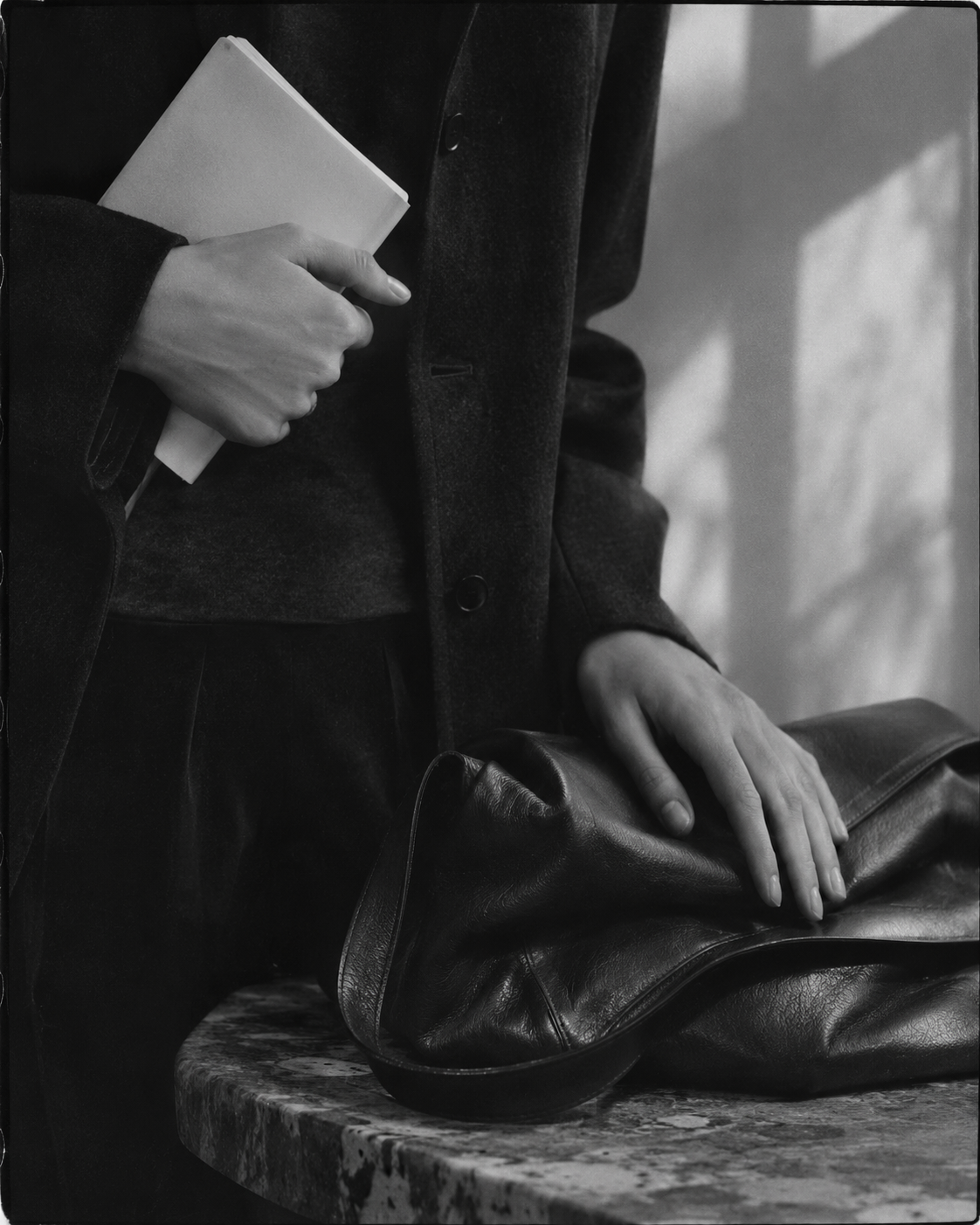
A point of view
PUNTO takes its working name from the Italian word for point or stitch. Its ambition is a leather house clients keep in their lives: judged by how an object is used and cared for, rather than the size of its logo. Carried for years, cared for always is a creative direction, not a lifetime-service guarantee.
What the research contributes
The supplied brand study looks across seven luxury houses. Its useful contribution is a set of lenses: time, material restraint, tactile identity, functional design and self-expression. PUNTO translates those ideas into its own fictional catalogue and advisor boundaries, rather than copying real products, copywriting or prices.
A subtle signature
A continuous stitch line and a quiet end-loop are proposed identity cues. Tone-on-tone marking lets the object take the lead. These are design concepts: the catalogue does not establish hand-stitching, origin, production hours or repairability for every product. Editorial images are illustrative, not product-specification evidence.
Who it speaks to
Clients value daily use, material, considered gifting and continuing care. Fifty fictional profiles vary by use, lifecycle and segment reference. An owned item or stated need can support personalisation; a group-level archetype cannot become a confirmed personal preference.
Voice, not a script
Write as one advisor speaking to one person: warm, restrained and practical. Use a relevant confirmed detail, short sentences and an optional next step. A greeting need not ask a question. Emoji are optional and usually omitted for complaints, repairs and price concerns. Examples teach tone, not canned answers.
Service with honest limits
No invented stock, discounts, craft hours, memories, event arrangements or repair guarantees. Care stays within the supplied policy: safe wiping where applicable, then boutique assessment. No lifetime, free-service, turnaround or outcome promise is inferred from the brand's creative ambition.
Seven lenses. One fictional house.
Editorial interpretations from the supplied brand study, not official brand statements or sales rankings.
- 01
Hermès
Time & lasting objects
Value use and continuing care; avoid status-led language.
- 02
Louis Vuitton
Journeys & practical use
Start product selection with what the client needs to carry.
- 03
Loro Piana
Material without noise
Describe known material simply, without superlatives.
- 04
Bottega Veneta
Tactility & quiet identity
Explore a subtle stitch signature instead of a loud monogram.
- 05
LOEWE
Craft & modern function
Keep a creative product idea connected to real ways of using it.
- 06
Fendi / Selleria
Stitching & patina
Use the stitch as a concept; never invent production hours.
- 07
Miu Miu
Self-expression & milestones
Allow self-reward and gifting without assumptions about status.
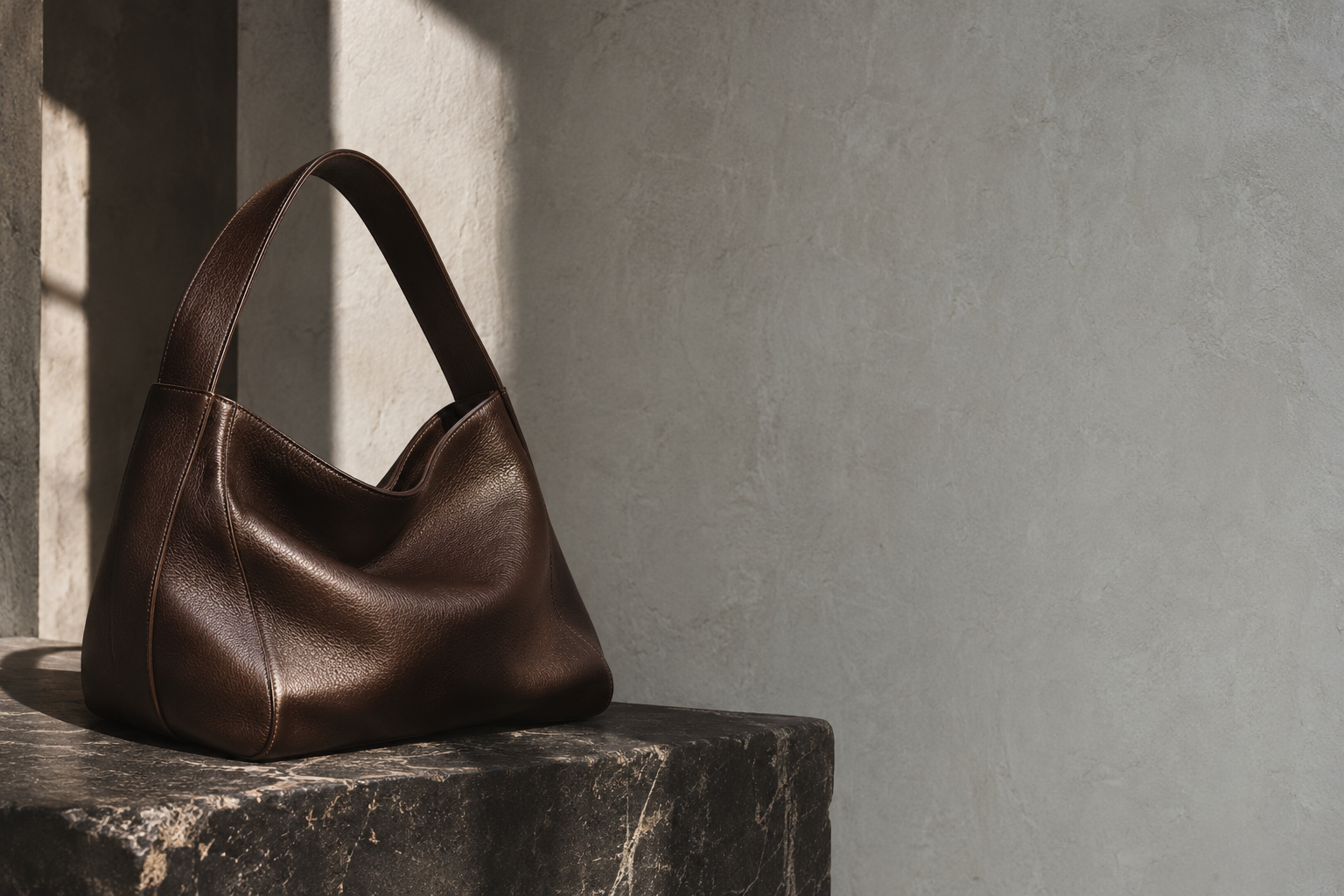
A deliberate price ladder.
Ten fictional products. Fixed RMB catalogue prices, read from the project data. No real-brand prices or availability implied.
Small essentials
RMB 4,200–9,800
- Coin Pouch4,200
- Key Case4,600
- Card Holder5,200
- Phone Pouch6,800
- Zip Wallet8,500
- Long Wallet9,800
Everyday & occasion
RMB 22,800–34,800
- Evening Pouch22,800
- Crossbody28,500
- Daily Tote34,800
The flagship
RMB 48,500
- Top-Handle48,500
An alternative must still fit the client's use. Moving down a tier is not a discount, and a listed item is not confirmed stock.
Content source
The supplied wider-brand study (04) informs the positioning and product structure. Its external price comparisons and aspirational service language do not become PUNTO facts or client-facing promises.
Read the supplied study · text onlyThree voice pillars
- USE — Start with the real need.
- PATINA — Value material and time without inventing claims.
- REPAIR — Keep care in the relationship, with honest limits.